Best results come from clean, dry wood chips chosen for the food and used in a measured amount. A compact Mini with thermometer makes it practical to compare alder, apple, and beech in batches without spending several kilograms of food on one test.
Which wood chips are best for smoking: alder, apple, or beech
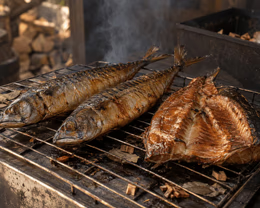
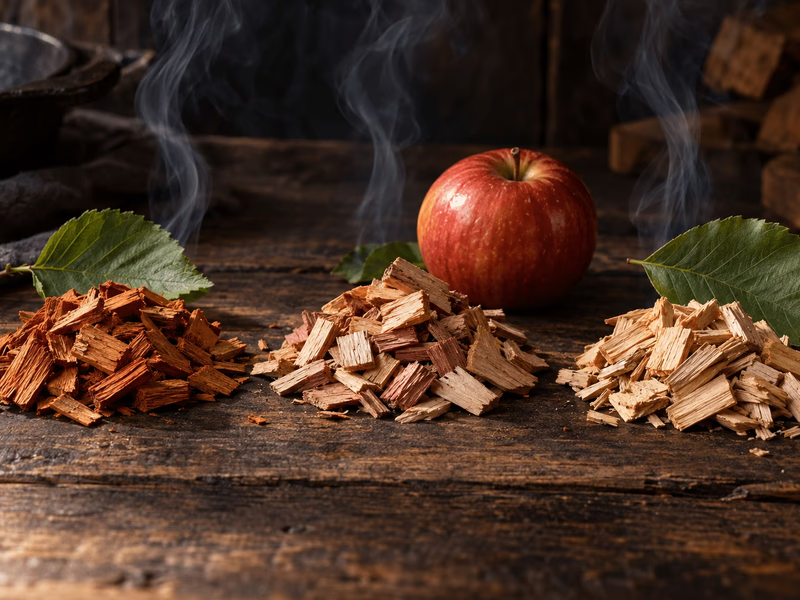
No single wood is best for every food: alder is the safest choice for fish, apple suits poultry and pork, and beech provides a balanced base for meat. Alder produces steady, moderately flavored smoke and a familiar golden color, making it reliable for mackerel, carp, bacon, or chicken. Apple is softer and slightly sweet, working well with turkey, ribs, cheese, and vegetables. Beech smolders predictably, creates a fuller but clean aroma, and does not overwhelm beef, sausages, or pork belly when used carefully. A large share of beech may still be too assertive for delicate fish. Never use conifer wood, plywood, chipboard, painted timber, or chemically treated scraps because they can release resin and unwanted substances. Test one known wood first, assess the food after it cools, and only then try a blend of 70–80% alder or beech with 20–30% apple. This keeps the result clean and repeatable.
Ingredients and preparation
Clean smoking requires dry, evenly sized chips, prepared food, salt, a thermometer, and a drip tray that keeps fat away from the wood. Choose chips with no dust, bark, mold, or chemical smell. Fine dust may ignite and create harsh smoke, while oversized chunks heat slowly and start smoldering late. Chips for a closed hot smoker do not need soaking: wet wood consumes heat, produces steam, and makes smoke generation less predictable. After curing, dry fish, meat, or poultry until its surface feels dry and slightly tacky so smoke settles evenly. A Mini with thermometer is convenient for trials: its 450×250×250 mm chamber holds up to 4 kg, allowing two woods to be compared without a large load. Spread chips in a thin layer over the heated area rather than piling them into a mound. Before heating, confirm that the drip tray sits securely above the chips and that the thermometer responds correctly.
Curing and marinade
Curing should support the food, while the wood aroma should complement seasoning rather than hide it under excess smoke. Fish paired with alder needs little more than salt, a little sugar, and pepper; a heavy sweet marinade can conceal its natural flavor. Apple works with poultry or pork seasoned with paprika, garlic, mustard, honey, or dried herbs. Beech can handle stronger seasoning on brisket, sausages, and beef, but liquid smoke is unnecessary because natural smoking already provides the aroma. After a wet brine, pat the food dry and leave it on a rack until the exterior no longer looks wet. The Standard with thermometer has a 400×300×300 mm chamber and holds up to 6 kg, but air gaps must remain between pieces. Do not compensate for an overcrowded rack with extra chips. Reduce the load or increase spacing; otherwise, sheltered areas stay pale while exposed surfaces collect a bitter deposit. Keep salt, drying time, and chip weight consistent when comparing woods.
Temperature and time
Temperature and doneness must be judged by the food type and a probe reading, not by visible smoke or a dark exterior. Use these practical starting points:
| Product | Wood chips | Temperature | Time | Chips per cycle |
|---|---|---|---|---|
| Whole fish or large fillet | Alder or alder with 20% apple | 80–100°C | 30–60 min | 25–40 g |
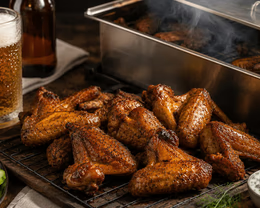
| Chicken wings, legs, or portions | Apple with alder | 95–110°C | 45–120 min | 30–50 g |
| Pork ribs or a small piece of belly | Beech with 20–30% apple | 100–110°C | 90–180 min | 40–70 g |
The FDA recommends an internal temperature of 63°C for fish—hot smoking at 80–100°C reaches this result consistently. The USDA recommends an internal temperature of 74°C for poultry—hot smoking at 95–110°C reaches this result consistently. Times vary with thickness, starting temperature, and load. The Big Daddy with thermometer has a 500×300×300 mm chamber and holds up to 9 kg. Thick white smoke signals poor combustion; clean smoke is thin and should not smell acrid.
Common mistakes
Flavor is usually spoiled by too many chips, damp material, or unstable heat rather than by the “wrong” hardwood. Avoid these errors:
- Adding chips “to be safe.” Dense smoke causes bitterness and a sticky coating; start small and adjust the next batch.
- Soaking the wood. Water creates steam and delays clean smoldering; use dry chips.
- Using bark or dust. It burns unevenly and tastes harsh; sift the chips.
- Loading wet food. Moist surfaces take smoke unevenly; dry food after brining.
- Letting fat reach the chips. Burning fat creates soot; install the drip tray.
- Opening the lid repeatedly. Heat escapes and timing changes; use the thermometer.
- Judging only by color. A golden surface does not prove doneness; use a probe.
- Mixing several woods immediately. A failed flavor becomes hard to diagnose; test each wood alone first.
Chef’s tip
The most reliable way to develop a blend is to run two otherwise identical sessions and change only the wood or its percentage. Use the same food, cure, chip weight, temperature, and time: begin with 100% alder, then test 70% alder and 30% apple. Compare aroma after the food cools and rests, not immediately after opening the smoker when your nose is saturated with smoke. The Standard with thermometer is useful because it holds up to 6 kg and leaves room between pieces, but keep their positions consistent. Record chip weight in grams rather than “handfuls,” since hand size and chip density vary. If flavor is too mild, increase the amount by only 10–15% next time. If bitterness appears, reduce the wood and check cleanliness, airflow, and the drip tray. This controlled test creates repeatable flavor and useful notes.
Smokers that are ideal for this method
All three Dym&Stal smokers work with this method; the main differences are capacity and trial-batch size. The Mini with thermometer measures 450×250×250 mm, holds up to 4 kg, and starts at ₴2,100. It suits fish, wings, bacon, and small comparisons of alder and apple. The Standard with thermometer has a 400×300×300 mm chamber, holds up to 6 kg, and starts at ₴2,350, making it useful for a family batch of chicken, pork, or several fish. The Big Daddy with thermometer measures 500×300×300 mm, holds up to 9 kg, and starts at ₴2,400, so it suits larger loads of ribs, belly, or fish. Every model uses 1.5 mm steel and comes in base-grade AISI 409 or premium AISI 304. The method is the same in all three smokers—stable heat at 80–110°C, dry chips, and doneness confirmed by internal temperature. Only chamber volume and food quantity change.
Find more recipes in our home smoking guide (coming soon)
Frequently asked questions
For consistent results, use clean, dry chips, start with a modest amount, and change only one variable in each test.
Should wood chips be soaked before smoking?
No, wood chips generally should not be soaked in a closed hot smoker. Wet wood consumes heat, creates steam, and makes smoldering harder to predict. Moisture does not automatically make smoke milder; once the chips dry, they smolder anyway. Use clean, dry pieces of similar size, spread them in a thin layer, and control the heat. An exception applies only when a specific smoker design or tested recipe explicitly requires soaking. For Dym&Stal smokers, dry chips without bark or dust are the straightforward baseline for repeatable results and easier temperature management.
How many wood chips should go into a smoker?
Start with 25–35 g for Mini, 35–50 g for Standard, and 45–70 g for Big Daddy per cycle. These are starting points: fish needs less wood than a long session for pork belly or ribs. Wood species, chip size, heat source, and desired intensity also matter. Do not add chips merely because smoke is barely visible; clean smoldering produces thin smoke and mild flavor. If the food lacks aroma, increase the weight by only 10–15% next time. If bitterness or black residue appears, reduce the amount and check whether fat is reaching the wood.
Can alder, apple, and beech chips be mixed?
Yes, alder, apple, and beech can be mixed, but two woods make results easier to understand. Alder or beech at 70–80% creates a stable base, while 20–30% apple adds a mild fruitwood note. For fish, combine alder with a little apple; for pork or poultry, use more apple; for beef and sausages, choose beech as the base. Avoid equal shares of all three because a muddled flavor is difficult to diagnose. Test each wood separately and record ratios by weight. This makes the recipe repeatable instead of leaving you to recreate an accidental “handful.”
The best chips do not make the most smoke; they support the food’s flavor without leaving bitterness.
What you need
A basic setup for clean smoke without harsh bitterness.
How to smoke
Choose the wood
Use alder for fish, apple for poultry and pork, and beech for meat or balanced blends.
Measure the chips
Start with 25–35 g for Mini, 35–50 g for Standard, or 45–70 g for Big Daddy.
Stabilize the heat
Maintain 80–100°C for fish and 95–110°C for poultry and most meat products.
Check doneness
Use the food’s internal temperature rather than relying only on color or elapsed time.